Quick answer: High-speed beverage bottling lines need valves that combine fast, repeatable actuation with a fully hygienic, crevice-free flow path. In most cases that means pneumatically actuated sanitary ball or butterfly valves in 316L stainless steel for main product transfer, sampling valves for QC checkpoints, and flush bottom or control valves at tank outlets — all rated for the CIP/SIP cycling that runs between every batch change. The valve choice directly affects line speed, product loss, and how often the line stops for unplanned maintenance.
Anyone who has run a bottling line at real production speed knows the uncomfortable truth: the valve is rarely the biggest, most expensive part of the line, but it's often the part that determines whether the line hits its target output or falls short of it. A valve that switches a fraction of a second too slow, seals imperfectly, or needs constant rebuilding doesn't just cause downtime — it quietly caps your line's real-world throughput below what the rest of the equipment is capable of.
This article looks at what actually matters when specifying valves for beverage bottling — water, juice, soft drinks, beer, wine, and other alcoholic beverages — and how to avoid the mistakes that show up as line speed loss six months after commissioning.
Why Valve Selection Matters More at High Speed
At low line speeds, a slightly underspecified valve is often forgivable — actuation timing, seal wear, and product hold-up all have more margin to hide in. At high speed, that margin disappears. A few specific pressures come into play:
Cycle frequency. A valve on a high-speed filling line might actuate thousands of times per shift. Components rated for occasional duty wear out fast under that cycle count, and worn seats are one of the most common causes of gradual leakage that operators don't notice until yield numbers start slipping.
Actuation speed. Slow-opening or slow-closing valves create bottlenecks at every fill head or transfer point. Pneumatically actuated valves with properly sized actuators and solenoids close this gap; undersized actuators are a common, under-diagnosed cause of "the line just won't hit rated speed."
CIP/SIP frequency. Beverage lines — especially dairy-adjacent and alcoholic beverage lines — clean between batches, sometimes multiple times a day. Valves need seat and seal materials that hold up to repeated caustic/acid exposure without swelling, cracking, or losing sealing force.
Product variety on shared lines. Many bottling plants run multiple SKUs — different juices, different carbonation levels, different viscosities — through the same equipment. Valves need to perform consistently across that variability, not just for a single "ideal" product.
Valve Types That Matter Most on a Bottling Line
Sanitary Ball Valves
Sanitary ball valves are a common choice for main product transfer lines because of their full-bore flow path, which minimizes pressure drop and product shear — important for carbonated beverages and anything with suspended pulp or particulates. With a polished, crevice-free ball and seat design, they hold up well to repeated CIP cycling while maintaining tight shut-off.
Sanitary Butterfly Valves
Sanitary butterfly valves are widely used at isolation and diverter points where a compact, lightweight valve is preferable to a full ball valve. They're economical for larger line sizes and are common at tank outlets and zone isolation points across water, juice, and soft drink lines.
Sanitary Control valves
For applications needing modulated flow rather than simple on/off switching — blending stations, dosing points, back-pressure control on carbonated lines — sanitary control valves give operators finer control than a standard ball or butterfly valve can offer.
Flush Bottom Ball Valves
At mixing and buffer tank outlets, flush bottom ball valves are the standard choice. Their flush-mounted design eliminates the dead leg that a standard outlet valve would create, which matters for both hygiene and for minimizing product left behind at every batch changeover.
Sampling Valves
QC checkpoints along the line need to draw samples without opening the process to contamination risk or stopping flow. Sampling valves are built specifically for this, letting quality teams pull representative samples repeatedly through a shift without compromising line hygiene.
Pneumatic Actuators
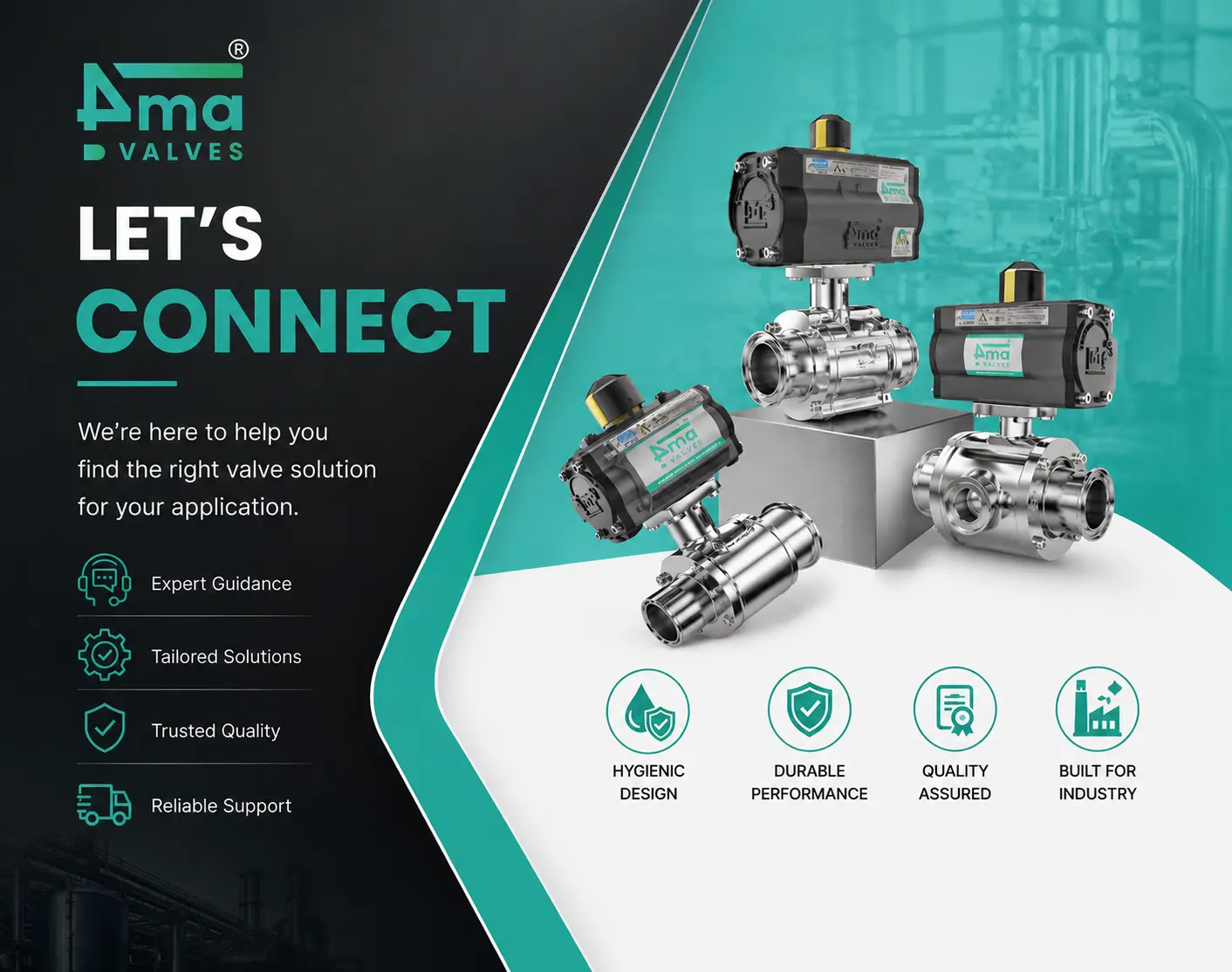
None of the above matters much if the actuation is slow or unreliable. Pneumatic actuators paired correctly with valve size and line pressure are what actually deliver the fast, repeatable switching that high-speed filling and diverting operations depend on. Undersizing the actuator to save cost upfront is one of the more common — and most avoidable — causes of underperforming bottling lines.
Material and Hygiene Standards That Apply Across the Line
Regardless of valve type, a few baseline standards apply across a beverage bottling line:
- 316L stainless steel for all product-contact surfaces, resisting the acids and chlorides common in juice, soft drink, and CIP chemistry
- FDA-compliant elastomers (EPDM, Silicone, PTFE depending on product and temperature) for seats and seals
- Crevice-free, hygienic design meeting standards such as 3-A and EHEDG where applicable
- CIP/SIP compatibility verified against your actual cleaning chemistry and cycle frequency, not assumed from a generic spec sheet
- Consistent surface finish across all wetted parts to prevent residue buildup and support fast, effective cleaning
Common Mistakes That Slow Down Bottling Lines
Undersized actuators. Valves that are mechanically correct but paired with an actuator too small for the line's cycle speed or air supply pressure become the bottleneck no one budgeted for.
Mixing valve brands and seal materials inconsistently. Lines built up over years with valves from different suppliers often end up with inconsistent seal compounds, which complicates CIP validation and spare parts management.
Treating all duty points the same. A valve spec that works for a low-cycle tank outlet is often wrong for a high-cycle fill-head application, and vice versa. Matching valve type to duty point — rather than standardizing on one valve style across the whole line — usually delivers better real-world throughput.
Skipping CIP compatibility verification. Assuming a "sanitary-rated" valve will handle your specific CIP chemistry without confirming seal material compatibility is a common source of premature seal failure on beverage lines running frequent caustic washes.
How This Applies Across Beverage Categories
Our beverage industry page outlines the range of applications we support — water, juice, soft drinks, beer, wine, and other alcoholic drinks — and the fluid handling, agitation, and mixing components that underpin those lines. Each category has its own nuances: carbonated products need valves that won't shear or foam the product at transfer points, while higher-viscosity juices with pulp need full-bore paths that won't clog or shear particulates.
A Practical Specification Checklist
- Match valve type (ball, butterfly, control, flush bottom) to each specific duty point on the line
- Confirm 316L stainless steel and FDA-compliant elastomers for all product-contact parts
- Size actuators to your actual required cycle speed, not just the valve's nominal rating
- Verify CIP/SIP chemical compatibility against your real cleaning program
- Standardize on consistent valve and seal specifications across the line where possible, to simplify maintenance and validation
- Confirm material traceability and certification documentation for audit and customer requirements
Final Thoughts
On a high-speed beverage bottling line, the valve is rarely the most visible piece of equipment — but it's frequently the piece quietly limiting output, product yield, or uptime. Matching valve type to duty point, sizing actuation correctly, and holding every wetted component to consistent hygienic and material standards is what separates a line that hits its rated speed from one that never quite gets there.
If you're specifying or troubleshooting valves for a bottling line, our team can help match valve type, materials, and automation to your exact line speed and product range. Get in touch with our engineering team or browse our complete product range to get started.
Frequently Asked Questions
What's the most common valve type used on beverage bottling lines?
Sanitary ball valves are the most widely used for main product transfer due to their full-bore design and tight shut-off, though butterfly valves are common at isolation points and control valves are used where flow needs to be modulated rather than simply switched on or off.
How does valve choice affect line speed on a bottling line?
Actuation speed and cycle-life directly cap how fast a filling or diverting operation can run reliably. A correctly sized pneumatic actuator on a properly specified valve allows the line to run at its rated speed without the valve becoming the limiting factor.
Do carbonated beverages need different valves than still beverages?
Carbonated products benefit from full-bore, low-shear valve designs to avoid excessive foaming or product loss at transfer points, and seal materials need to hold up under the pressure differentials carbonation introduces.