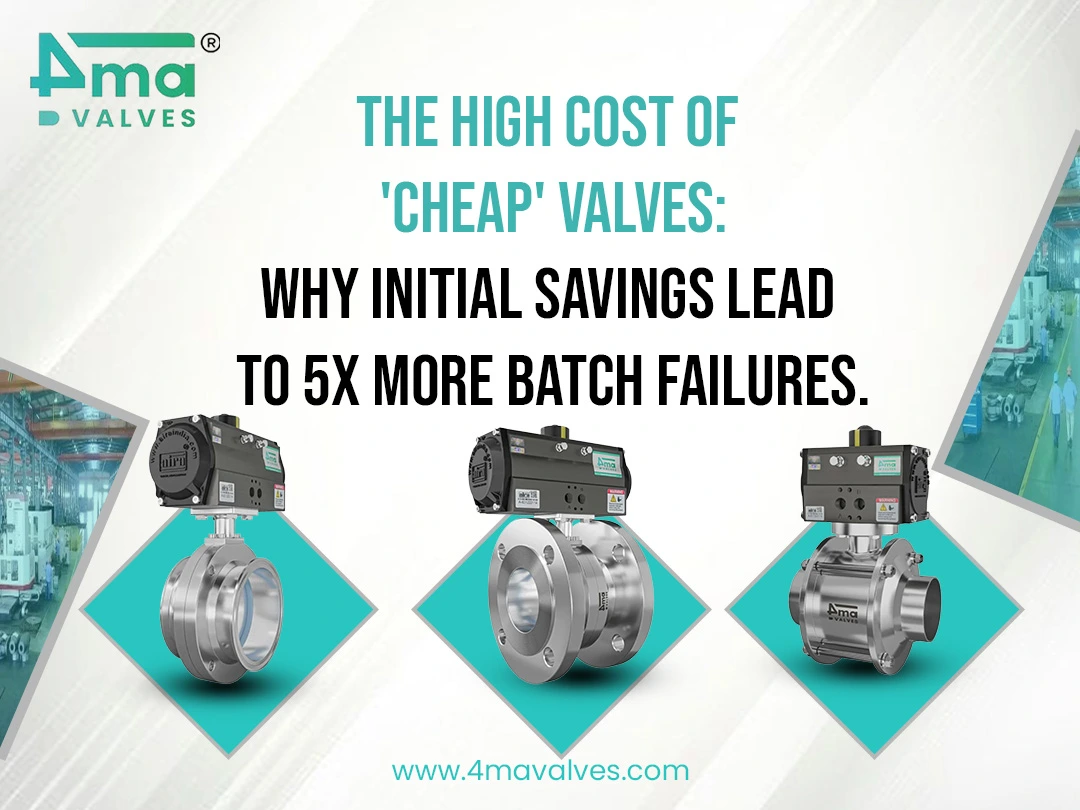
Most industrial buyers try to get the best deal. It’s normal. A cheaper valve looks like a smart purchase at the moment. You feel like you saved a few thousand up front. But things start slipping when that same “budget-friendly” valve becomes the heart of a shutdown, a leaking line, or a spoiled batch.
In industries where every production cycle matters—pharma, dairy, food, chemicals—valves don’t just open and close. They protect your entire workflow. They control purity, pressure, flow, and safety. Valves like a stainless steel ball valve, stainless steel butterfly valve, or sanitary control valves directly influence batch success.
That’s why 4ma Valves Automation focuses on engineering-grade, long-life stainless steel valves. You can check their stainless steel valve options on their product category pages to see how much difference material and construction actually make.
But for now, let’s talk about the real cost of going “cheap.”
Understanding the Real Price of Cheap Industrial Valves
The Hidden Lifecycle Costs Nobody Calculates
A cheap valve rarely stays cheap for long. Buyers focus on the invoice, not the lifecycle. Here’s where cost quietly builds up:
- More frequent replacements
- Sudden downtime
- Higher maintenance hours
- More inspections
- Extra quality checks before every batch
And each of these adds load on your operating cost. Your “saving” is gone before the machine completes 2–3 cycles.
Why Low-Quality Materials Fail Faster
Cheap valves usually come from poor casting, unknown suppliers, or mixed-grade steel. Some don’t follow proper machining standards. Seals feel weak. Seat quality looks questionable.
Once you run corrosive media, high pressure, or fast temperature changes, these low-grade parts give up quickly. No certification, no real testing, no material traceability—it all adds to failure risk.
These quality compromises often sit hidden until the first serious problem appears.
How Cheap Valves Trigger 5x More Batch Failures
Leakage and Pressure Drop
Leaks sound small, but they ruin entire batches. A weak seat or poor-ball finishing often causes leakage in a stainless steel ball valve. Pressure drops mess with the process, and once the parameter slips, the batch goes out of spec.
One leak can destroy hours of work.
Microbial Contamination
This is dangerous for sanitary lines. Cheap valves with rough internal surfaces trap particles, moisture, and microbial growth. A low-grade sanitary control valve can push your hygiene system off balance.
Food, dairy, and pharma industries run zero room for contamination. But cheap valves make the risk worse with every cycle.
Actuator Misalignment & Torque Issues
Cheap butterfly valve assemblies often struggle with alignment, torque, and disc sealing. A poorly engineered stainless steel butterfly valve doesn’t maintain uniform pressure or seat contact. The actuator strains more. The disc starts rubbing against the seat.
Sooner or later, it fails during operation—usually when you need it most.
All these issues connect back to the larger clusters of valve reliability, operational efficiency, batch quality, and sanitary process control.
The Hidden Expenses Behind Batch Failures
Cost of Line Shutdowns
Every plant knows the burn rate of downtime. One hour of shutdown can cost thousands, sometimes lakhs. And most shutdowns start with a very small technical fault.
A cheap valve turns into an expensive trigger.
Cost of Scrap, Reprocessing & Lost Production Cycles
This is the biggest loss. One failed batch can cost five times more than what you saved by choosing the cheapest valve. And if your plant deals with chemicals, dairy, or pharmaceuticals, the financial hit becomes even more intense.
Cost of Compliance Violations
Cheap valves can push your system out of compliance.
- HACCP
- ISO
- cGMP
- FDA standards
All of these need hygienic, traceable, reliable valve systems. You can add a link to your certification or compliance page here so users can understand what makes a valve “certified.”
Why High-Grade Stainless Steel Valves Reduce Total Cost of Ownership
Superior Material Construction
Material quality changes everything. High-grade stainless steel—304 or 316—holds corrosion better, handles temperature swings easily, and performs under pressure. A well-made stainless steel ball valve lasts years longer than its cheaper counterpart.
Precision Engineering = Reliable Flow Control
Premium valves come with consistent machining and uniform finishing. A ball valve stays tight. A seat stays aligned. The shutoff stays accurate. This means stable, repeatable performance every time.
Hygienic Advantages of Premium Sanitary Valves
Electropolished surfaces, smooth internals, zero dead zones—these things matter. A strong sanitary control valve protects your product quality. It prevents contamination, residue buildup, and hygiene issues.
Cheap valves simply can’t match this.
What Makes 4ma Valves Automation a Better Long-Term Investment
Compliance, Testing & Material Traceability
4ma Valves Automation follows strict engineering and quality protocols. Each valve goes through CNC machining, pressure tests, leak checks, and material identification. Heat number traceability ensures every part comes from certified stock.
You can link your Quality or Certification page here for transparency.
Industry-Specific Valve Solutions
Different industries demand different valve features.
- Pharma needs polished sanitary valves
- Food and dairy need hygienic butterfly valves
- Chemical plants need strong stainless steel valves that handle corrosion
4ma Valves Automation builds valves for these exact needs.
Long-Term Customer ROI Case Example
A food-processing unit switched from budget valves to high-grade stainless steel valves. Their batch failure rate dropped by nearly 70% within 3–4 months. Their maintenance team saw fewer breakdowns. Their downtime reduced. Their cost savings became consistent.
Sometimes, one upgrade changes everything.
Choosing the Right Stainless Steel Valve for Your Process Line
Stainless Steel Ball Valve Selection Guide
Ball valves need the right bore design, seat material, and pressure rating. Full-bore options work great for high-flow lines. Reduced bore suits lower flow needs. Seat materials decide durability during temperature swings.
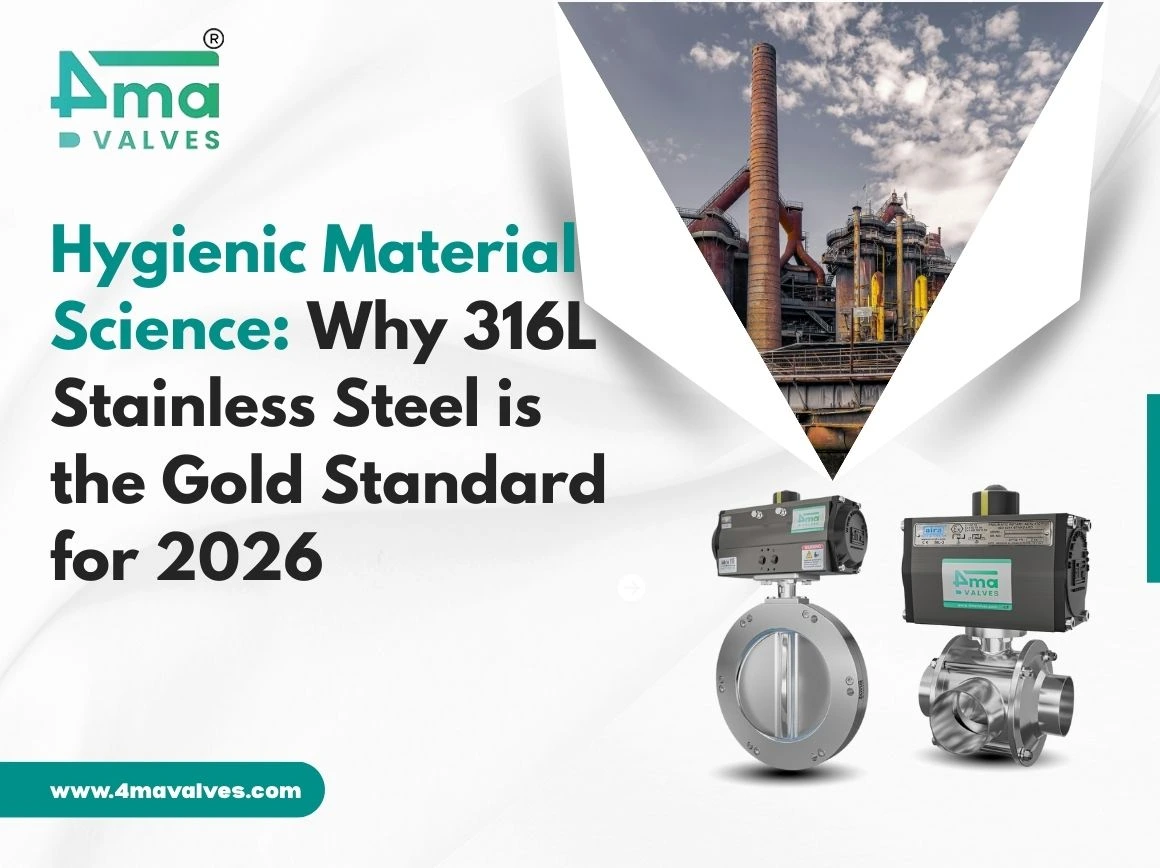
Also read, Hygienic Material Science: Why 316L Stainless Steel is the Gold Standard for 2026.
Stainless Steel Butterfly Valve Performance & Applications
Butterfly valves work best in applications where you want quick operation and lower weight. Stainless steel discs and high-grade seals improve reliability. You get better shutoff, smoother operation, and longer life.
Sanitary Control Valves for Food, Dairy & Pharma
Sanitary valves must maintain purity. Look for:
- Electropolished finish
- Zero dead-angles
- CIP/SIP compatibility
- Stainless steel construction
This cluster covers most of the high-demand industries today.
How to Evaluate Valve Quality Before Buying — A Practical B2B Checklist
1. Material Certifications
Ask for MTC 3.1. Always verify metallurgy. Don’t skip this.
2. Machining Quality & Surface Finish
Smooth finishing inside matters more than outside. Sanitary lines need low Ra values to prevent buildup.
3. Pressure & Leak Testing Standards
Ensure the valve passes hydrostatic and bubble-tight tests. Always.
4. Actuator Compatibility
Your actuator torque must match the valve type. Misalignment is one of the biggest failure risks.
5. Warranty & Service Support
A company that trusts its product will always support it long-term.
Why Stainless Steel Valves Outperform Cast Iron or Brass in Critical Applications
Advantages in Corrosive Environments
Chemicals, salts, acids—stainless steel handles these better than cast iron or brass. It resists rust and pitting, which protects your media flow.
Advantages in Sanitary Processing
Rust particles or surface roughness can ruin batches. Stainless steel prevents these issues.
Lower Contamination & Higher Product Purity
This makes stainless steel the default choice for pharma, biotech, dairy, cosmetics, and food processing.
Summary — Why the Cheapest Valve Is the Costliest Decision
Cheap valves look good on paper, but only for a moment. They slip fast. They leak, corrode, misalign, and cause shutdowns. The initial saving never holds. It actually becomes a multiplier for batch failures and downtime.
High-grade stainless steel ball valves, stainless steel butterfly valves, and sanitary control valves protect your line, your workflow, and your product quality.
Conclusion
Cheap valves create hidden risks. Superior stainless steel valves eliminate them. When you choose engineered, certified, and traceable valves, your plant runs smoother. Your batches stay stable. Your downtime drops.
That’s why companies choose reliable solutions from 4ma Valves Automation.
Explore high-performance stainless steel valves at: www.4mavalves.com

 Group of Company


