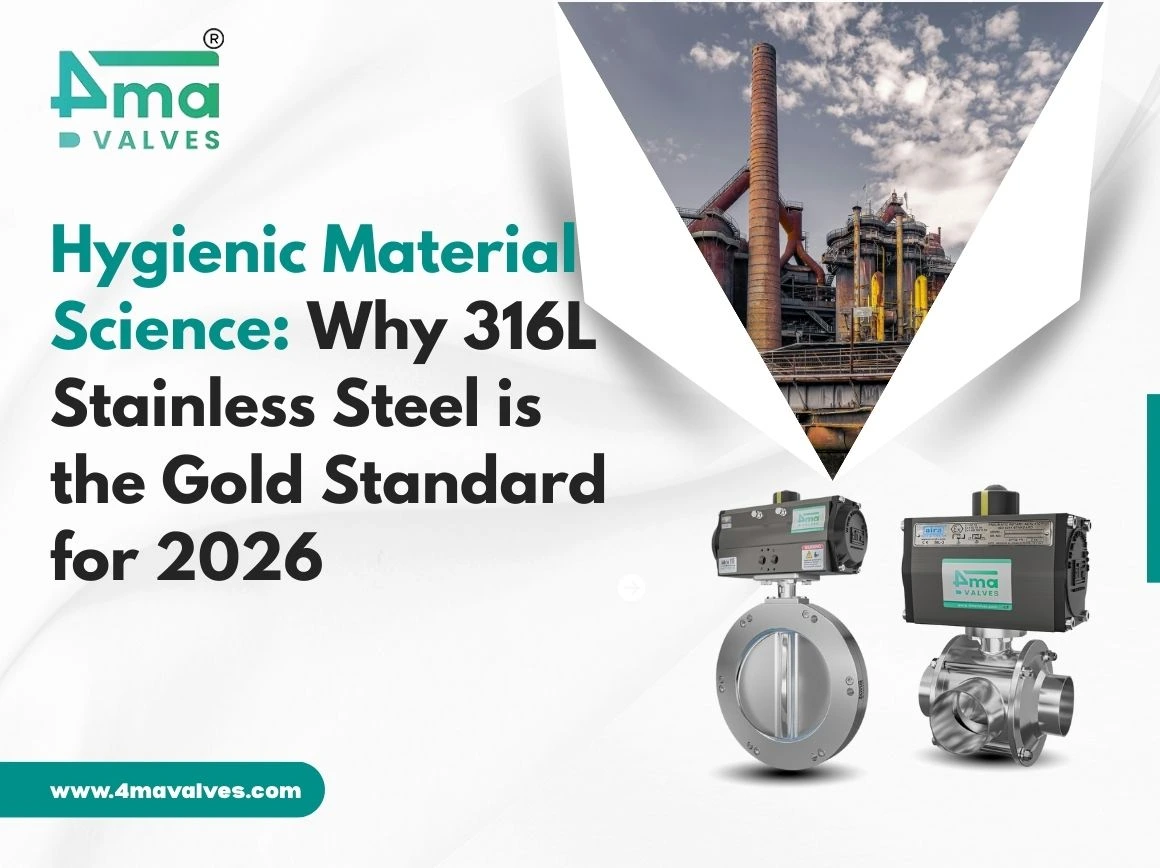
The industries that depend on clean, reliable, and long-lasting flow control systems expect more in 2026. Processes run faster. Regulations get tougher. And contamination risks feel higher than ever. That’s why many engineers and plant heads now turn to 316L stainless steel as their go-to material for hygienic and high-purity applications. It handles harsh media, tough cleaning cycles, and demanding hygiene standards without giving trouble.
At 4MA Valves Automation, we see this shift every day. Companies want materials that perform consistently under stress, and they want valves that stay clean, safe, and dependable. So, this blog breaks down why 316L stainless steel stands out and how it strengthens products like Stainless Steel Ball Valves and Stainless Steel Butterfly Valves.
What Makes 316L Stainless Steel Unique in Modern Valve Engineering
316L stainless steel offers a mix of durability, hygiene, and corrosion resistance that most alloys struggle to match. It gives industries a material that stays stable when chemicals, steam, or extreme conditions hit the system.
Chemical Composition & Low Carbon Advantage
The “L” in 316L means low carbon. This small change makes a big difference. Low carbon reduces the chance of sensitization and cracking. Welded areas stay stronger. Valves last longer, especially in systems with frequent thermal cycling.
Many engineers pick 316L simply because it stays reliable even when operators run tough cleaning cycles or handle aggressive media.
Superior Corrosion Resistance in Critical Applications
316L stands firm in salty, acidic, and chemically active environments. It prevents pitting and crevice corrosion, which often destroy regular stainless grades. You see the benefit clearly in marine plants, chemical factories, food units, and pharma setups.
Hygienic Benefits That Support Clean Manufacturing
316L offers a naturally smooth surface that reduces contamination risks. It doesn’t trap residues easily. It cleans fast during CIP and SIP cycles, which keeps downtime low. That’s why food and pharmaceutical engineers trust 316L more than regular SS grades.
Why 316L Is the Preferred Choice for Stainless Steel Ball Valves
Ball valves need strong bodies and precise sealing. 316L supports both. When you look at lifecycle performance, it becomes clear why plant managers keep choosing it.
Mechanical Strength & Wear Resistance
Stainless Steel Ball Valves made from 316L hold their strength under high pressure. They handle temperature swings better than most standard alloys. The sealing stays stable. The torque remains predictable. The valve works harder for longer.
Clean, Low-Maintenance Operation
Industries that value hygiene—like dairy, beverages, biotech, and cosmetics—prefer 316L ball valves. The material doesn’t shed particles. It doesn’t react with the media. Cleaning cycles take less time. And operators feel more confident about product purity.
How 316L Enhances the Life of Stainless Steel Ball Valves
Long-term cost matters. 316L gives a better lifecycle value because it reduces maintenance calls, shutdowns, and replacements. Many clients of 4MA Valves Automation actually shifted from 304 valves to 316L once they saw the difference in performance after just a few months.
Why 316L Stainless Steel Butterfly Valves Are Becoming the 2026 Industry Standard
Butterfly valves depend heavily on surface finish and hygiene. 316L gives them the right balance of strength, flow performance, and cleanability.
Lightweight, Efficient, and Hygienic Flow Control
316L butterfly valves maintain smooth flow with minimal pressure drop. They work well in large lines where operators want easy maintenance. The lighter body structure reduces installation effort and keeps the entire system efficient.
Corrosion-Free Operation in Food, Dairy & Beverage Systems
These industries can’t risk flavor or odor contamination. 316L makes sure the product quality stays consistent. It handles CIP cycles easily. And it keeps the valve body clean even when temperatures shift fast.
Market Trends Showing Rising Adoption in 2026
Industry demand for Stainless Steel Butterfly Valves built in 316L keeps climbing. Hygienic design isn’t optional anymore. Many factories update their old systems just to meet modern standards in 2026.
Hygienic Material Science Trends for 2026
The world of material science changes quickly. But one trend stays strong: industries want high-purity alloys that handle strict hygiene needs.
Shift Toward High-Purity Alloys in Process Industries
Pharma and biotech plants are upgrading their systems faster than ever. They now look for valves that meet purity requirements right from the material level.
Regulatory Pressure for Hygienic-Grade Components
FDA, 3A, and ASTM guidelines influence buying decisions. Many companies now choose 316L to stay future-ready and compliant without changing equipment often.
Sustainability & Recyclability as Buyer Priorities
Stainless steel offers strong recyclability. 316L lasts long, reduces waste, and lowers overall lifecycle cost. This matters because many companies now track carbon impact deeply.
The Rise of Smart Valves & Digital Monitoring
More plants use sensors and automated control systems. 316L supports these upgrades because it holds stability during thermal stress and pressure variations.
How 4MA Valves Automation Implements 316L Across Its Product Line
At 4MA Valves Automation, precision and hygiene sit at the center of every stainless steel valve we build.
Precision Machining of Stainless Steel Ball Valves
We follow strict machining tolerances for our Stainless Steel Ball Valves. Each part aligns accurately. The finish stays clean. The valve delivers consistent torque and sealing even in heavy-duty conditions.
Hygienic-Grade Design for Stainless Steel Butterfly Valves
We polish internal surfaces to reduce contamination risks. Welds stay clean. Edges stay smooth. These details matter when industries depend on purity and flow accuracy.
Custom Solutions for High-Purity Applications
Some clients need unique configurations. We provide custom MOC certificates, special end connections, and application-specific trims. Traceability stays intact from source to final valve.
316L vs Other Stainless Grades: What Engineers Compare Most
This comparison matters for buyers who evaluate materials before finalizing.
316 vs 316L
316L has lower carbon. It welds cleaner. It avoids sensitization. It lasts longer in systems with steam, heat, and CIP cycles.
304 vs 316L
304 works well in non-critical systems. But 316L handles aggressive chemicals and contamination risks better. Plants that deal with hygiene almost always pick 316L.
Why 316L Outperforms Duplex Steel in Hygienic Applications
Duplex offers strength but struggles with cleanability. The grain structure and surface finish don’t match 316L’s hygiene performance. CIP systems run smoother with 316L.
Material Science Breakdown — Microstructure, Cleanability & Durability
316L’s microstructure supports stable, sterile production. It resists chemical attack. It keeps the internal surface consistent during thermal stress.
How the Microstructure Supports Sterile Production
The low-carbon structure reduces carbide precipitation. Welded areas stay cleaner and stronger.
Impact of Surface Roughness on Hygiene
A smoother surface collects less residue. 316L makes it easier to achieve the Ra values required for hygienic-grade systems.
Also read, Energy-Efficient Actuation: How Modern Solenoid Valves Reduce Your Plant’s Carbon Footprint.
Long-Term Thermal & Chemical Stability
CIP and SIP cycles don’t damage the material. High temperatures don’t weaken it. Chemical cleaning agents don’t wear it out.
Purchasing Guide — When to Choose 316L Stainless Steel Valves
Buyers often ask when 316L becomes the right choice. The answer depends on the application.
Situations Where 316L Is Non-Negotiable
Use it in pharma, chemical processing, dairy, beverages, and any high-purity application. These systems need top-level hygiene.
When You Can Use Other Stainless Grades Instead
For non-critical lines or budget setups, 304 sometimes works. But it won’t match the hygiene and resistance that 316L offers.
Future Outlook — Why 316L Will Dominate High-Purity Flow Control in 2026 & Beyond
Demand keeps rising. Hygienic requirements keep getting stricter. And industries want materials that stay stable under heavy stress.
Buyers now value longevity more than short-term cost. 316L fits this mindset perfectly. It supports automation, sustainability, and stricter global standards.
Conclusion
316L stands strong as the material industries trust the most for clean and reliable flow control. It offers durability, hygiene, and unmatched corrosion resistance. And it empowers companies to meet the rising standards of 2026.
At 4MA Valves Automation, we work closely with engineers and buyers who need dependable Stainless Steel Ball Valves and Stainless Steel Butterfly Valves made from 316L. If your process demands purity and consistency, 316L gives you the confidence you need.
Explore our Stainless Steel Ball Valves, Stainless Steel Butterfly Valves, and other stainless-steel solutions at 4mavalves.com.
For custom requirements or project-specific guidance, reach out through our contact page.


 Group of Company


