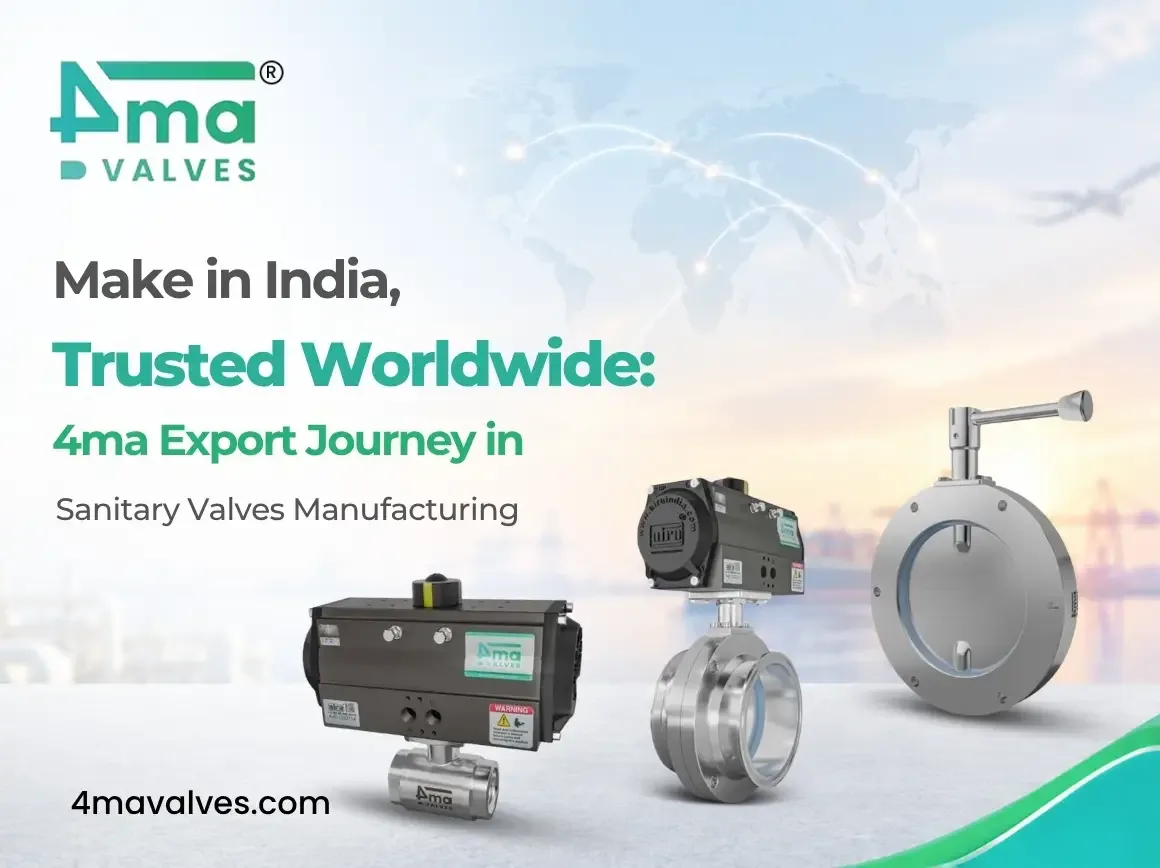
Quick answer: 4MA Valves manufactures stainless steel sanitary valves in Ahmedabad, India, to the same material, hygienic design, and quality standards expected by pharmaceutical, food, dairy, and cosmetic processors globally. Our export journey reflects a broader shift — Indian valve manufacturing has moved from being viewed as a lower-cost alternative to being recognized as a reliable, quality-consistent source for global hygienic processing equipment, backed by shorter lead times than most overseas competitors can offer their own regional markets.
"Make in India" is often discussed as a policy slogan. For manufacturers like us, it describes something more concrete: a daily discipline of building valves in Ahmedabad that meet the same material certifications, surface finish standards, and hygienic design principles that a plant in Germany, the US, or Southeast Asia would demand from any supplier, domestic or international. This article walks through what that journey has actually involved — the standards we build to, the markets we serve, and why Indian-manufactured sanitary valves are increasingly the preferred choice for processors who once defaulted to European or other imported brands.
Why "Made in India" Used to Mean Something Different
For years, Indian manufacturing carried an unfair but persistent perception in some global markets — associated with lower cost, but also lower consistency. That perception has shifted substantially over the past decade, driven by a few concrete changes across the Indian industrial valve sector:
- Material sourcing discipline — consistent use of certified 316/316L stainless steel rather than variable-grade substitutes
- Investment in precision manufacturing — CNC machining, controlled welding processes, and electropolishing capability that match international surface finish standards
- Adoption of recognized hygienic design standards — 3-A and EHEDG-aligned design principles becoming standard practice rather than a premium add-on
- Export-driven quality discipline — manufacturers serving international markets have had to build quality systems that hold up to foreign buyer audits, which raises the baseline for every customer, not just export clients
At 4MA Valves, this shift has shaped how we build every valve — not just the ones destined for export, but every unit that leaves our Ahmedabad facility.
What Export-Grade Actually Means in Practice
"Export-grade" isn't a marketing label — it's a specific set of practical commitments that shape how a valve is designed, built, and documented:
Consistent Material Certification
Every batch of stainless steel used in our valves is traceable, with material certification available for customers who need it for their own regulatory or audit documentation — a requirement that's standard for pharmaceutical and food-grade buyers internationally, regardless of country of manufacture.
Hygienic Design Aligned with Global Standards
Our sanitary ball valves, sanitary butterfly valves, and pharma diaphragm valves are designed around crevice-free, fully drainable geometry — the same hygienic design logic that underpins 3-A and EHEDG expectations, regardless of which market the valve ships to.
Surface Finish and CIP/SIP Performance
Export buyers in pharmaceutical and food processing routinely specify surface finish tolerances and CIP/SIP validation expectations that match what we've written about in detail in selecting sanitary valves in hygienic systems — a standard we hold across our full catalog, not a separate export-only specification.
Documentation and Traceability
International buyers, particularly in regulated industries, expect full documentation packages alongside the physical product — material certificates, dimensional reports, and where relevant, validation support documentation.
The Industries and Markets This Serves
Our manufacturing standards support the same industries internationally that we serve domestically — pharmaceutical, food, cosmetic, dairy, and beverage processing. The underlying engineering challenge is consistent across borders: hygienic processing plants everywhere need valves that resist corrosion, eliminate dead legs, and hold up to repeated CIP/SIP cycling — whether that plant is in Gujarat or anywhere else in the world.
Why Global Buyers Are Increasingly Choosing Indian Manufacturers
A few structural advantages have made Indian sanitary valve manufacturing genuinely competitive on the global stage, not just on price:
Manufacturing scale with engineering flexibility. Indian manufacturers can often support both high-volume standard product runs and custom-engineered solutions without the long lead times that larger, more rigid overseas manufacturers sometimes require for non-standard specifications.
Cost structure that doesn't compromise material quality. Lower manufacturing overhead in India doesn't have to mean lower material grade — it means a more competitive price at the same 316L stainless steel, hygienic design standard that global buyers require.
Growing quality system maturity. As more Indian manufacturers pursue export certifications and international buyer audits, the overall quality discipline across the sector has risen, benefiting every customer, domestic and international alike.
Responsive engineering support. Many global processors have found that direct access to the manufacturer's own engineering team — rather than routing through multiple layers of distribution — produces faster, more accurate answers to specification and troubleshooting questions.
This is also why total cost of ownership often favors well-established Indian manufacturers over cheaper, less consistent import alternatives — a topic we cover in more depth in why cheap imported valves cost more long-term.
What This Means for Buyers Evaluating Suppliers
If you're evaluating an Indian manufacturer for sanitary valves, whether for a domestic project or as part of a global procurement strategy, a few questions help separate genuinely export-grade manufacturers from those simply labeling themselves that way:
- Can the manufacturer provide material certification and batch traceability for every order?
- Does the hygienic design meet recognized standards like 3-A or EHEDG, not just a general "sanitary" label?
- What CIP/SIP validation data or support can the manufacturer provide?
- What's the manufacturer's track record with international buyers, and can they provide references?
- How quickly can the manufacturer respond to technical or engineering questions directly, without multiple layers of distribution delay?
Our Commitment Going Forward
Our export journey isn't a side project separate from our domestic business — it's the same quality discipline applied consistently, because the hygienic processing standards that matter to a pharmaceutical plant in Europe are the same ones that matter to a cosmetic formulator in Ahmedabad. You can read more about our manufacturing standards and company history on our company overview page.
Final Thoughts
"Make in India" has moved from a policy aspiration to a manufacturing reality in the sanitary valve sector — and our own export journey reflects that shift. Building valves that meet global hygienic processing standards isn't a separate track from our domestic work; it's the same discipline, applied consistently, batch after batch.
If you're evaluating valve suppliers for a project anywhere in the world, we'd welcome the conversation. Contact our team or explore our full product range to see what export-grade manufacturing looks like in practice.